THE 8TH OPEN SOCIETY CONFERENCE 2026
Register Now
Day(s)
:
Hour(s)
:
Minute(s)
:
Second(s)
Conference Day : October 15, 2026
About the Conference
The Open Society Conference is the annual conference hosted by the Faculty of Law, Social, and Political Sciences, Universitas Terbuka, Indonesia. The conference has been held 7 times, starting from a national conference, and escalating into an international conference. This is a place for academicians, students, researchers, practitioners, and policymakers to disseminate their research. We also invite speakers either academicians or professionals for sharing and exchanging knowledge.
Visit our past conference through UT TV Channel at @universitasterbukatv follow for more updates about Universitas Terbuka.
The conference theme of OSC 2026 is “Bridging Technological Innovation, Governance and Social Responsibility: Advancing Digital Interconnectivity, Social Capital, and Global Resilience”
We invite professionals, academicians, and students to contribute their ideas to be presented at our conference. The conference will be held on 15th October 2026 from 07.00 AM to 04.30 PM (Jakarta Time).
Venue: Universitas Terbuka Convention Center, Tangerang Selatan, Indonesia (Hybrid Event with Zoom and UTTV YouTube Live Streaming)
Background
In the era of digital transformation that is rapidly evolving, technology moderation plays a crucial role in managing collective action in the legal, social, and cultural realms. The Open Society Conference as an annual event hosted by Faculty of Law, Social, and Political Sciences (FHISIP) Universitas Terbuka examines how technological integration can strengthen regional and global resilience in the face of contemporary crises. These developments require an adaptive approach to anticipate negative impacts, such as political polarization, social conflicts and racial conflicts to the international scale affecting social dynamics that require collective solutions for the community. Advances in information and communication technology facilitate access to information which also increases the escalation and complexity of global conflicts.
Amidst rapid and often unpredictable change, technological developments are outpacing regulations, the global economy is volatile, geopolitical conflicts are escalating, and social relations are being transformed by digitalization. In such a situation, innovation cannot be left to its own devices; it must be balanced with wise governance and social responsibility so that the resulting digital connectivity is not only technically sophisticated but also inclusive and equitable. When managed well, technology can strengthen trust, expand social networks, and help communities build collective resilience. Ultimately, what is needed is not just technological progress, but the collective ability to use it as a pillar of solidarity and social resilience in an increasingly uncertain world.
FHISIP Universitas Terbuka plays a strategic role as a catalyst in the synergy of technology with legal and social resilience through the Open Society Conference agenda. FHISIP Universitas Terbuka is a study center that formulates collective solutions to the complexity of global conflicts through the integration of conflict management into the digital space. Through an adaptive approach, FHISIP encourages responsive policy reconstruction and digital literacy of the community that brings technological advances based on social stability and regional resilience in the midst of contemporary crises.
The conference theme “Bridging Technological Innovation, Governance and Social Responsibility: Advancing Digital Interconnectivity, Social Capital, and Global Resilience” is intended to emphasize the importance of moderation of
social technology in creating stability at both regional and global levels.
This event includes: (1) International Seminar as an academic forum to strengthen the study and thinking of legal, social and technological in overcoming various global conflicts; and (2) the signing of the Memorandum of Agreement (MoA) and Implementation Arrangement (IA) of UT with the Co-host as a basis for strengthening cooperation in the fields of education, research, and community service.
Scopes of the Conference:
This conference provides a platform for interdisciplinary discussions, knowledge sharing, and collaborative problem-solving on key global challenges.
The scope includes, but is not limited to, the following areas:
- Law
- Business Administration
- Public Administration
- Taxation
- Governance Science
- Communication Science
- Library and Information Science
- Sociology
- English Literature
Sub-Theme
Digital Entrepreneurship; Sustainable Ecosystems; Business Innovation
Responsible Digital Entrepreneurship: Fostering Sustainable Business Ecosystems through Innovation and Ethical Governance
Empowering digital entrepreneurs to build sustainable business ecosystems via innovative solutions and ethical governance. It emphasizes eco-friendly practices, inclusivity, and integrity to drive long-term economic growth in the digital era.
Adaptive Governance; Digital Public Administration; Responsive Public Service Delivery
Building Adaptive and Digitally-Enabled Public Administrations for Responsive Governance
Building adaptive and digitally enabled public administrations involves integrating technology, data systems, and flexible institutional practices to improve governance processes. Digital tools support faster information flow, evidence-based decision-making, and coordinated services. Such approaches can strengthen administrative capacity, enhance transparency, and enable public institutions to respond more efficiently to evolving societal needs and service demands.
Legal Innovation; Collaborative Regulation; Technology and Law
Technological Moderation for Collective Legal Response
Technological Moderation for Collective Legal Response emphasizes the role of technology in supporting coordinated legal frameworks and institutions to address emerging societal challenges. Through digital governance, data regulation, and collaborative legal mechanisms, technology can enhance accountability, improve law enforcement efficiency, and facilitate collective responses to complex legal issues in an increasingly interconnected world.
Digital Communication; Public Communication Strategy; Civic Trust
Strategic Communication in the Digital Sphere: Cultivating Civic Trust through Data-Driven Approaches
In an era characterized by rapid information flows, algorithmic media environments, artificial intelligence misuse, and widespread misinformation, governments, institutions, and civic organizations face increasing challenges in maintaining public trust. Data analytics, digital listening tools, and evidence-based communication strategies offer new opportunities to understand public sentiment, design targeted messages, and evaluate communication effectiveness. This subtheme examines how communication professionals and institutions utilize digital data to develop more transparent, responsive, and accountable communication strategies. Additionally, this subtheme also welcomes discussions on ethical considerations and the role of digital platforms in shaping public discourse and civil engagement.
E-Governance; Digital Governance; Transparency; Accountability
Responsible Governance in the Digital Era: Navigating Transparency, Accountability, and Public Trust
Responsible governance has become increasingly important amid the ongoing digital transformation that affects various aspects of public administration. The rapid development of information and communication technologies has reshaped the patterns of interaction between governments and citizens through the use of digital media, online platforms, and electronic government (e-government) systems. In this context, the utilization of digital technology serves as a strategic instrument to enhance transparency, strengthen accountability, and build public trust in governance within the digital era.
Information literacy; Library Information Ecosystems; Library Resilience
Resilient Library and Information Ecosystems
This theme explores the dynamic synergy between technology, people, and governance in library science. It focuses on building adaptive infrastructures that withstand digital disruptions while ensuring equitable access. It invites research on innovative metadata, information literacy, and strategic governance to foster sustainable global knowledge ecosystem.
Innovative Tax Governance in the Digital Economy: Strengthening Fiscal Fairness, Social Trust, and Global Economic Resilience
Explores innovative tax governance in the digital economy, focusing on policies and institutional frameworks that enhance fiscal fairness, strengthen public trust, and support resilient economic systems. It highlights how adaptive tax systems and digital transformation can promote transparency, compliance, and sustainable fiscal governance in an increasingly interconnected world.
Digital Resilience; Cultural Discourse; Global Alliances
Digital Resilience: Cultural and Literary Discourses of Global Alliances
It explores how cultural and literary narratives strengthen resilience in an interconnected digital world. As technology reshapes the circulation of ideas, knowledge, and cultural expression across borders, literature and cultural discourse become important sites for dialogue, collaboration, and mutual understanding. It invites studies on literary texts, digital narratives, translation practices, and other cultural discourses that show how digital connectivity can foster global alliances, inclusivity, intercultural awareness, and social resilience amid contemporary challenges.
Digital Power, Social Capital, and Inclusive Resilience: Interrogating Gender and Inequality in Technologically Mediated Societies
Digital spaces are not neutral but shaped by power relations that influence access, participation, and the distribution of technological benefits. This subtheme highlights how social capital, gender, and inequality shape digital inclusion. A sociological perspective is essential to ensure that digital innovation supports equitable participation and inclusive collective resilience.
IMPORTANT DATES

Participants Fee
OFFLINE
National
Subtitle goes HereInternational
Subtitle goes HereONLINE
National
Subtitle goes HereInternational
Subtitle goes HerePublication
Abstract Only (Online Dissemination)
Subtitle goes Here- *Dissemination is carried out without publish full papers. Abstract and Online Dissemination Only.
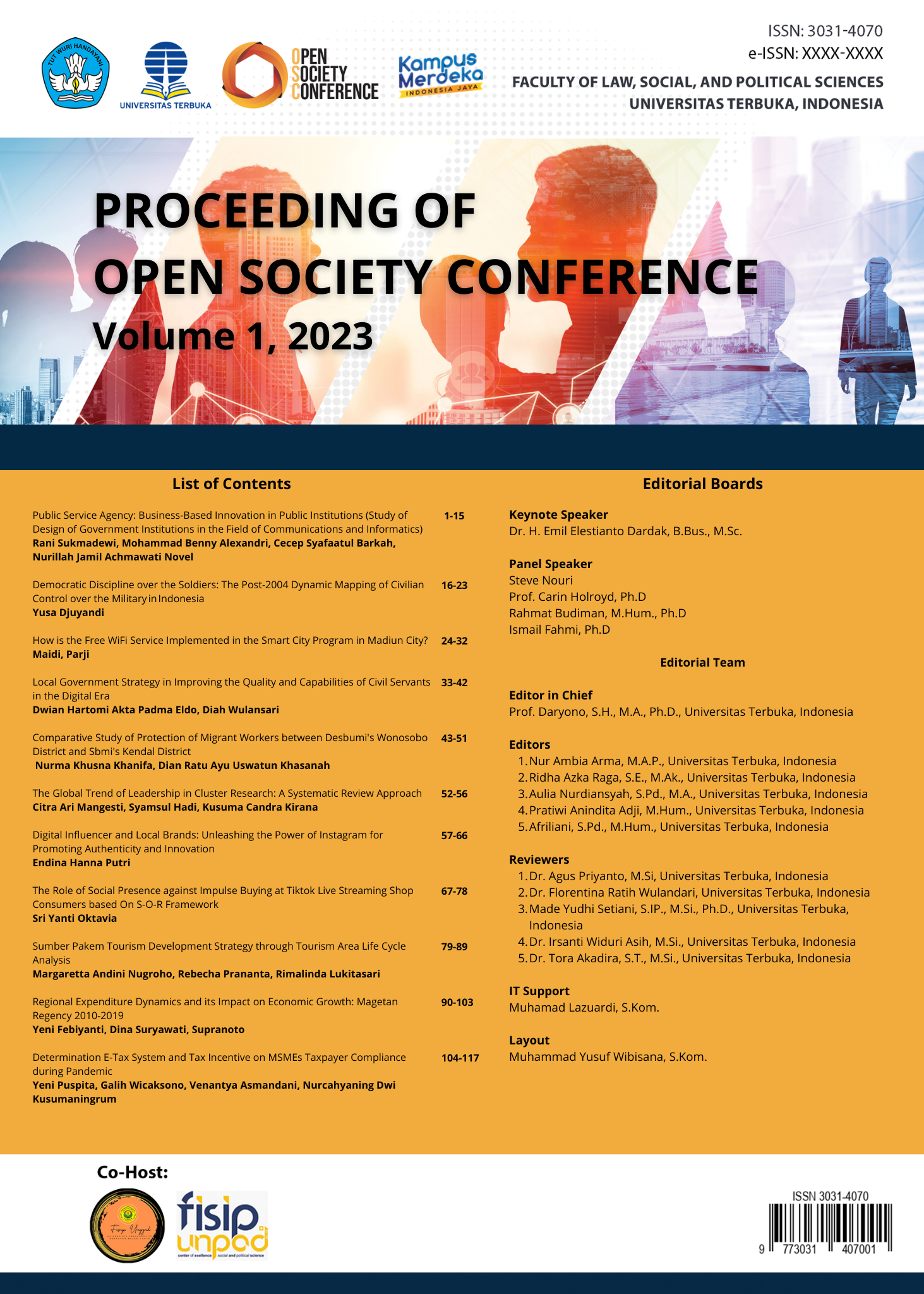
About the Conference Proceedings Series



© OSC 2026. FHISIP – Universitas Terbuka. All Rights Reserved.